

JAVIER CABRERA: A TASTE OF TIMBÍO, A GIFT TO NEW YORK

Actualizado: 23 abr
Con esfuerzo y dedicación Javier Cabrera ha conquistado un nombre propio en Nueva York. Su trabajo reafirma sus raíces e impulsa productos andinos en la escena internacional, convirtiendo la cocina en un puente cultural y de promoción de su natal Timbío, donde realiza labor humanitaria.

Por Ximena Hidalgo Ayala
Historiadora, fundadora y directora ejecutiva del Comité Internacional Galo Plaza y de su exclusivo network de empresarios y profesionales XHA Club, dedicado a promover la integración a través de historia, educación y cultura.
Through perseverance and dedication, Javier Cabrera has established a distinguished presence in New York. His work reaffirms his roots and promotes Andean products on the international stage, transforming cuisine into a cultural bridge and a platform for the promotion of his native Timbío, where he also engages in humanitarian initiatives.
El chef colombiano Javier Cabrera, especialista en cocina peruana, ha consolidado una trayectoria que lo posiciona como un talento reconocido en Nueva York, donde ha innovado los menús de prestigiosos restaurantes, incorporando productos latinoamericanos.
En el dinámico entorno de Long Island City, entre sus modernos rascacielos, resalta el trabajo de Javier Cabrera, un profesional con amplia experiencia internacional que, como orgulloso embajador de su cultura, busca los mejores ingredientes para dar vida a sus creaciones.

Colombian chef Javier Cabrera, a specialist in Peruvian cuisine, has built a career that positions him as a recognized talent in New York, where he has innovated the menus of prestigious restaurants by incorporating Latin American products.
In the dynamic setting of Long Island City, among its modern skyscrapers, the work of Javier Cabrera stands out. A professional with extensive international experience, he proudly serves as an ambassador of his culture, seeking the finest ingredients to bring his creations to life.
Chef ejecutivo de restaurantes peruanos en Long Island City y Long Island, Javier Cabrera impulsa nuevos proyectos como chef consultor e iniciativas que reflejan su empeño por posicionar los sabores latinoamericanos en la escena gastronómica neoyorquina.
Javi, como afectuosamente le llaman sus amigos, continúa promoviendo con pasión los productos latinoamericanos en el ámbito global. En este contexto, revela el lanzamiento de su nueva marca de café, un proyecto que reafirma su visión de unir tradición, innovación y cultura.

Executive chef of Peruvian restaurants in Long Island City and Long Island, Javier Cabrera drives new projects as a consulting chef and initiatives that reflect his commitment to positioning Latin American flavors in New York’s gastronomic scene.
Javi, as his friends affectionately call him, continues to passionately promote Latin American products on a global scale. In this context, he announces the launch of his new coffee brand, a project that reaffirms his vision of uniting tradition, innovation, and culture.
De Timbío a SkyBar
En esa nueva fasceta de "consulting chef" se suma su labor en el SkyBar de Long Island City, donde renovó totalmente el menú introduciendo no solo productos de América Latina, sino también propuestas artísticas propias, como el postre “Banana Chimichanga”, que refleja su capacidad de innovación, elevada creatividad y estilo personal.
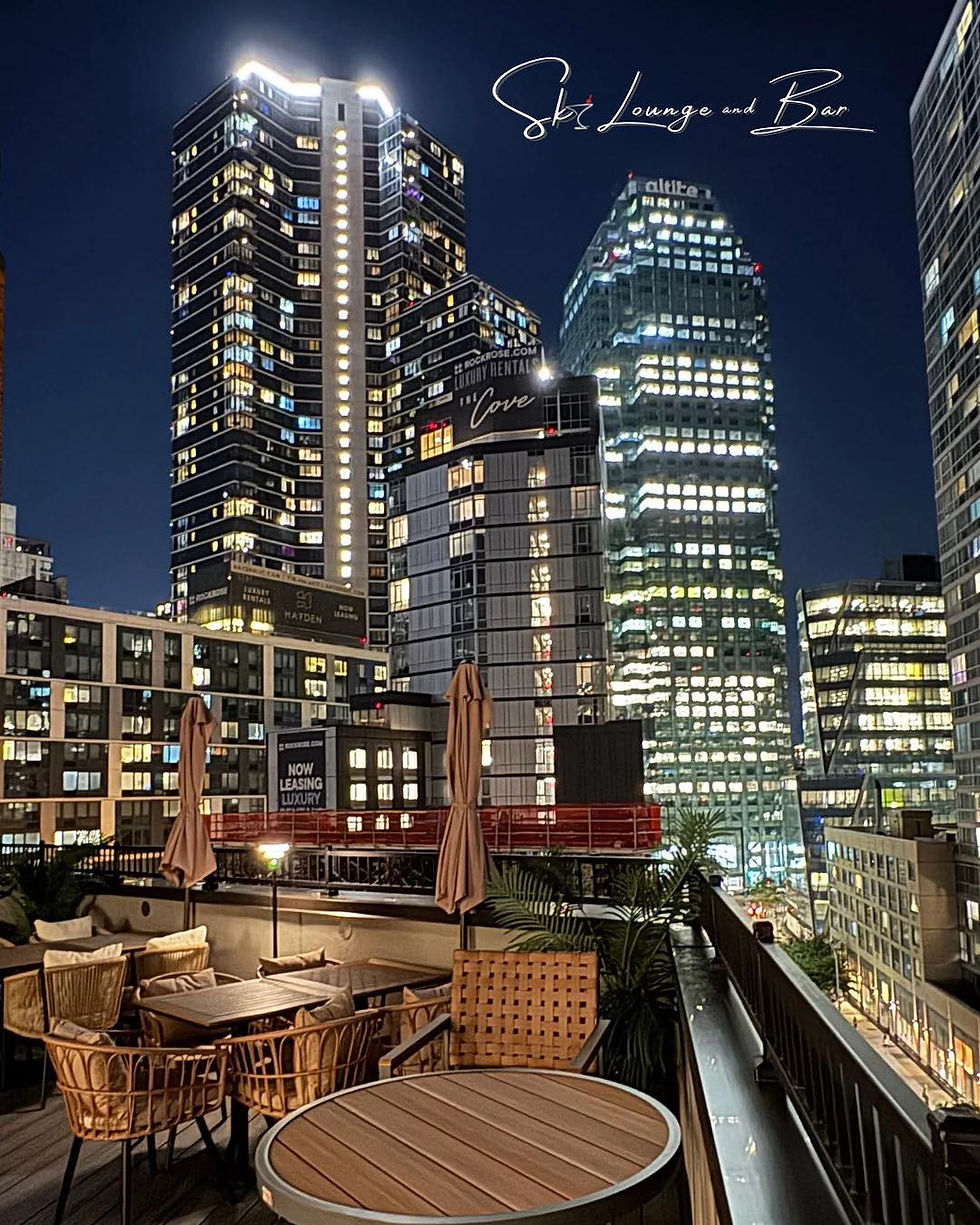
Le entrevistamos en el alucinante SkyBar de su Long Island City, con impresionantes vistas de Manhattan, Queens y Brooklyn, fascinante paisaje en el cual este chef andinoamericano realiza sus sueños.
In this new facet as a consulting chef, he adds his work at SkyBar in Long Island City, where he completely renewed the menu by introducing not only products from Latin America but also his own artistic creations, such as the dessert ‘Banana Chimichanga,’ which reflects his capacity for innovation, high creativity, and personal style.
We interviewed him at the stunning SkyBar in his Long Island City, with impressive views of Manhattan, Queens, and Brooklyn — a fascinating landscape where this Andean-American chef brings his dreams to life.
¿Cómo inició esta nueva etapa de consultoría?
- Un cliente frecuente del restaurante peruano que dirijo, pidió hablar con el chef y salí a saludar, -casi nunca lo hago porque siempre me mantengo en mi uniforme de batalla-, pero ante la insistencia accedí. Este cliente me explicó que le gustaban mucho los sabores y colores de mis platos, que le parecían muy interesante, lo cual no me asombró porque estudié artes plásticas y utilizo esas bases en el diseño de mis platos.
Solicitó mi ayuda en el restaurante de su terraza-bar SkyBar, a cuya insistencia acepté, ya que desde mayo hasta octubre en que inicié la renovación total de toda la infraestructura del restaurante del bar, no dejó de insistir. Para obviar el gran trabajo que implicaba esta reestructuración, le solicité una cifra alta, pero aceptó mi propuesta y he renovado a SkyBar, incluyendo su menú, en el que utilizo varios productos latinoamericanos.
How did this new stage of consulting begin?
-A regular client of the Peruvian restaurant I run asked to speak with the chef, so I came out to greet him — something I rarely do because I usually stay in my battle uniform — but given his insistence, I agreed. He explained that he greatly enjoyed the flavors and colors of my dishes, finding them very interesting, which did not surprise me since I studied fine arts and use that foundation in the design of my plates.
He requested my help with his rooftop bar restaurant, SkyBar, and after persistent insistence I accepted. From May to October, when I began the complete renovation of the restaurant’s infrastructure, he never stopped asking. To account for the extensive work this restructuring required, I proposed a high figure, which he accepted, and I have since renewed SkyBar, including its menu, where I incorporate several Latin American products.

¿Qué estás haciendo para promocionar los productos latinoamericanos?
- Como desde hace años trabajo en restaurantes peruanos, comencé por ahí, con los ajíes andinoamericanos, utilizando ají panca para los marinados, estoy trabajando actualmente con postres. No es una cocina completamente equipada para funcionar en restaurante, si no adaptada para el servicio como complemento del bar, entonces hay limitaciones en cuanto a equipos, pero eso estimula mi creatividad.
En la carta de postres he introducido una creación que fue resultado de una emergencia en Tokio. Allá, un excéntrico cliente mexicano, que solía quemar dólares en la mesa, solicitó un postre y yo en la cocina solo tenía dulce de leche, tortillas para tacos y bananas, así que se me ocurrió untar la tortilla con dulce de leche, envolver la banana en la tortilla y fritar todo esto, así nació la Banana Chimichanga”, que se convirtió en un éxito. En ese entonces, -hace como veinte años-, ese cliente fascinado con mi invento, me dejó quinientos dólares de propina. Fue impresionante.
Recordando esta anécdota, comencé a preparar Banana Chimichanga y ha sido un éxito total en SkyBar, los clientes viven enamorados de este postre. No utilizo ningún dulce pastelero, solo auténtico dulce de leche argentino, por su calidad, sabor y textura.

What are you doing to promote Latin American products?
-Since I have worked for years in Peruvian restaurants, I started there, with Andean peppers, using ají panca for marinades, and I am currently working with desserts. It is not a fully equipped kitchen designed to function as a restaurant, but rather adapted to serve as a complement to the bar, so there are limitations in terms of equipment — yet those limitations stimulate my creativity.
On the dessert menu, I introduced a creation that was born out of an emergency in Tokyo. There, an eccentric Mexican client, who used to burn dollar bills at the table, asked for a dessert. In the kitchen I only had dulce de leche, taco tortillas, and bananas, so I thought of spreading the tortilla with dulce de leche, wrapping the banana in it, and frying the whole thing. That’s how the Banana Chimichanga was born, and it became a success. Back then — about twenty years ago — that client, fascinated by my invention, left me a five-hundred-dollar tip. It was unforgettable.
Recalling that anecdote, I began preparing Banana Chimichanga again, and it has been a total success at SkyBar. Customers are in love with this dessert. I don’t use any pastry cream, only authentic Argentine dulce de leche, for its quality, flavor, and texture.
¿Qué otros productos latinoamericanos estás promoviendo?
- Me fascina ir a la juguetería, -como llamo a los supermercados con secciones completas dedicadas a Latinoamérica-, donde encuentras productos auténticos clasificados por país. Encontrar esos productos me inspira a crear y me abre horizontes.
He introducido ají amarillo, panca, Marisol. Las salsas ahora se hacen de cero, no más barbecue sauce, ni salsa de tomate o mayonesa industrial. Todo en mi nuevo menú se prepara con ingredientes naturales. He comenzado a utilizar chuño, que es la papa deshidratada que especialmente en el invierno la usan en platos típicos peruanos. Utilizó camarón ecuatoriano, que es irremplazable, tengo un coctel de camarones y posteriormente vamos a tener ceviche, cuando los clientes conozcan más del marisco, para no tener pescado congelado. Adicionalmente estoy tramitando mi propia marca de auténtico café colombiano.
What other Latin American products are you promoting?
-I love going to what I call the toy store — supermarkets with entire sections dedicated to Latin America — where you find authentic products classified by country. Discovering those products inspires me to create and broadens my horizons.
I have introduced ají amarillo, ají panca, and Marisol peppers. Sauces are now made from scratch — no more barbecue sauce, ketchup, or industrial mayonnaise. Everything on my new menu is prepared with natural ingredients. I have begun using chuño, the dehydrated potato that is especially used in traditional Peruvian dishes during the winter. I use Ecuadorian shrimp, which is irreplaceable; I currently have a shrimp cocktail and later we will offer ceviche, once customers become more familiar with seafood, so we don’t rely on frozen fish. Additionally, I am in the process of launching my own brand of authentic Colombian coffee.
¿Cuéntanos más de esta primicia?
- No hay apoyo del gobierno de Colombia a la promoción gastronómica, como la tienen en otros países, pero tengo contactos directos para importar productos desde Colombia y este proyecto se está materializando. Ya tengo el registro del café producido en la finca cafetera en el área donde nací. No se puede importar cualquier tipo de café, se requiere una ficha técnica, dependiendo de la altura y tipo de café. Estamos sembrando de los 1800 a los 2400 metros de altura. Para el 2026 tendremos un nuevo café en Nueva York. Incluso ya tengo tiendas aseguradas para comprar mi café.
Tell us more about this premiere
There is no support from the Colombian government for gastronomic promotion, as exists in other countries, but I have direct contacts to import products from Colombia and this project is becoming a reality. I already have the registration for the coffee produced on the farm in the area where I was born. Not just any type of coffee can be imported; a technical specification is required, depending on the altitude and variety. We are planting between 1,800 and 2,400 meters above sea level. By 2026 we will have a new coffee in New York. I even already have stores committed to buying my coffee.

¿Cómo va tu proyecto de ayuda a los niños en Colombia?
- Desde hace tres años apoyo a la escuelita donde estudié de muy pequeño en mi natal Timbío. Estudié los dos primeros años de escuela, cuando mis padres tenían una fábrica de velas. Mi padre compraba parafina por kilos, para hacer manualmente velas, ese era el sustento familiar. Veinte años después, tenemos la fábrica de velas más grande del suroccidente de Colombia, actualmente mi padre vende toneladas de parafina a varios departamentos.
For the past three years I have been supporting the little school where I studied as a child in my hometown of Timbío. I completed my first two years of primary school there, at a time when my parents ran a candle factory. My father used to buy paraffin by the kilo to make candles by hand — that was our family’s livelihood. Twenty years later, we now have the largest candle factory in southwestern Colombia, and today my father sells tons of paraffin to several departments.
Un mensaje final
Mi historia es un recordatorio para toda la comunidad migrante de Nueva York, que con esfuerzo y dedicación se pueden alcanzar grandes metas. Mantengan la mirada en su objetivo y no se rindan.
A Final Message
My story is a reminder to the entire migrant community in New York that with perseverance and dedication, great goals can be achieved. Keep your eyes on your objective and never give up.
El chef Javier Cabrera es GOLD MEMBER del XHA NETWORK
Para consultoría se puede comunicarse directamente al:
(929) 471 - 6204
SIGA AL CHEF CABRERA EN SU CUENTA DE INSTAGRAM
HACIENDO CLICK EN EL LOGO


Visítelo y saboree el BANANA CHIMICHANGA en

45-06 Pearson Street Rooftop
Long Island City, NY 11101
(718) 678-5165
Esta entrevista se comparte gracias al respaldo de XHA CLUB, Network de prestigiosos y renombrados empresarios y profesionales, dedicado a promover el rescate de la presencia latinoamericana en la Historia de Nueva York, trabajo que desde 2006 desarrolla el
Comité Internacional Galo Plaza Inc.,
establecido para mantener el legado del líder internacional nacido en la capital del mundo, en el 5 West de la calle 8 y 5a Ave. de Manhattan, el 17 de febrero de 1906.
PARA CONOCER SOBRE EL TRABAJO DEL COMITE GALO PLAZA
HAGA CLICK EN EL SIGUIENTE LOGO

Para conocer a todos los miembros de XHA CLUB,
haga clic en el logo a continuación y
apoye a los empresarios y profesionales de gran nivel,
que respaldan la HISTORIA, EDUCACIÓN Y CULTURA

Promoviendo la historia desde el lugar de nacimiento de Galo Plaza
PROHIBIDO EL USO, REPRODUCCIÓN O PUBLICACIÓN DE ESTE CONTENIDO SIN CITAR LA FUENTE: AUTOR Y SITIO WEB
©2025 Ximena Hidalgo Ayala/ XHA CLUB All Rights Reserved


